
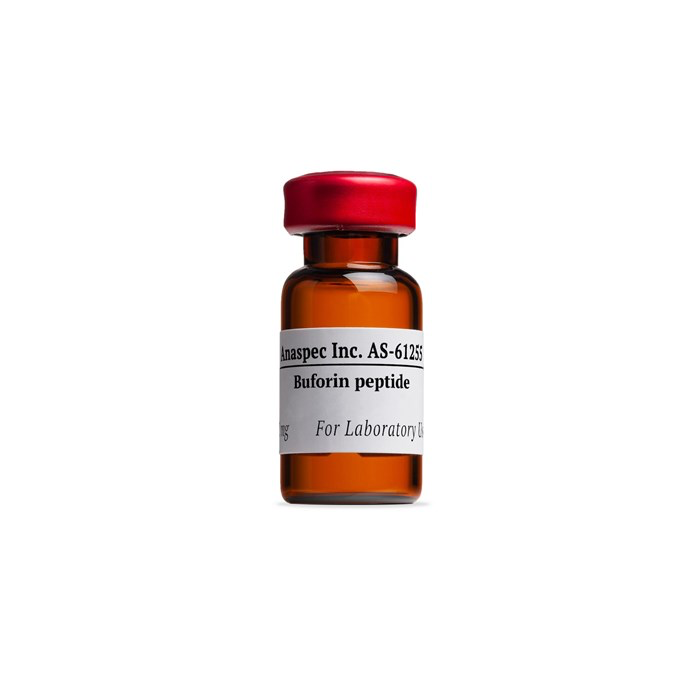
This peptide, also referred to as Buforin II peptide is a 21 amino acid peptide derived from Buforin I peptide that is isolated from the Asian toad Bufo gargarizans. The 21 amino acid peptide has been shown to possess anti-microbial activity by penetrating bacteria and inhibiting cellular functions. This antimicrobial peptide interacts with phospholipid bilayers and can be efficiently translocated accross the layer with a weak membrane permeabilization activity. The proline hinge in Buforin 2 is responsible for these cell penetrating properties. This class of antibacterial peptides therefore targets intracellular molecules, most probably nucleic acids, without significantly permeting cell membranes.
In comparison to magainin 2, this peptide binds DNA and RNA from E.coli with a much greater affinity. It is also considered a cell-delivery peptide and has been shown to deliver SiRNAs into cells followed by effective mRNA degradation.
Buforin 2 – 1 mg
Buforin 2 (1 mg) is a medication commonly formulated with buprenorphine as its active ingredient. It is typically used in the management of opioid dependence as part of a medically supervised treatment plan. Buprenorphine belongs to a class of medicines known as partial opioid agonists, meaning it activates opioid receptors in the brain but to a much lesser degree than full opioids. This helps reduce cravings and withdrawal symptoms without producing the same intense “high.”
At a 1 mg strength, Buforin 2 is considered a low dose and may be used during the early stages of induction or as part of a gradual tapering plan. Doctors may adjust the dose depending on the patient’s level of dependence, treatment response, and overall health condition. It is important that dosing decisions are made only by a qualified healthcare professional, as improper use can lead to side effects or reduced effectiveness.
Buforin 2 works by binding strongly to opioid receptors, which blocks other opioids from attaching to them. This blocking effect helps prevent misuse of other opioids while stabilizing the patient. Because of its long duration of action, it can often be taken once daily under medical supervision. In many treatment programs, it may be combined with counseling and behavioral therapy for best results.
Like all medications, Buforin 2 can cause side effects. Common ones may include headache, nausea, constipation, sweating, sleep disturbances, or mild dizziness. More serious side effects are rare but can include breathing difficulties, especially if combined with alcohol or other sedatives. Patients should always inform their doctor about any other medications they are taking to avoid harmful interactions.
In conclusion, Buforin 2 (1 mg) plays an important role in medication-assisted treatment for opioid dependence when prescribed and monitored appropriately. It supports recovery by reducing cravings and withdrawal symptoms while lowering the risk of misuse. Proper medical guidance, adherence to prescribed dosing, and supportive therapy significantly improve treatment outcomes and long-term stability.
![[pyr11] beta amyloid (11 40) 1 mg](https://premiumpeptidelabuk.com/wp-content/uploads/2026/02/IMG_3001-300x300.png)
Reviews
There are no reviews yet.