
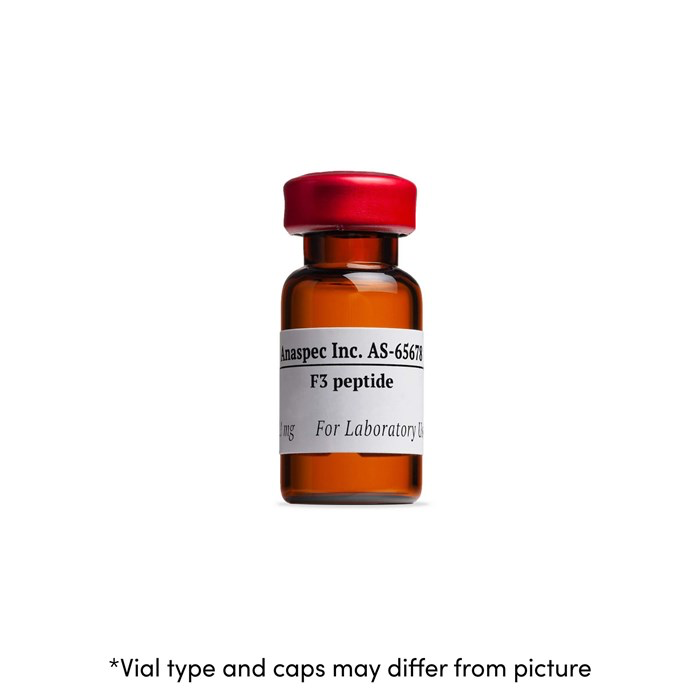
F3 peptide – 0.1mg
F3 peptide (0.1 mg) are small synthetic peptide commonly used in laboratory research, particularly in the field of targeted drug delivery and cancer studies. The F3 peptide is known for its ability to bind selectively to nucleolin, a protein that is often overexpressed on the surface of certain tumor cells and tumor-associated blood vessels. Because of this targeting property, researchers use F3 as a homing peptide to help deliver imaging agents or therapeutic compounds directly to specific cells.
At a dosage level of 0.1 mg, F3 peptide is typically handled in controlled research settings where precise measurements are important. In experimental studies, small quantities such as 0.1 mg may be used for in vitro cell assays or early-stage in vivo investigations. The low mass reflects the high potency and specificity of peptides, which often require only minimal amounts to produce measurable biological effects in laboratory conditions.
The mechanism of F3 peptide involves binding to cell surface nucleolin and facilitating cellular internalization. This makes it particularly valuable in the development of targeted drug delivery systems, including nanoparticle-based therapies. By attaching F3 to drug carriers, scientists aim to improve precision, enhance therapeutic concentration at disease sites, and reduce unwanted effects on healthy tissues.
In preclinical research, F3 peptide has been studied in models exploring tumor imaging, anti-cancer drug transport, and vascular targeting. Its ability to home in on proliferating endothelial cells and malignant tissues has positioned it as a promising tool in experimental oncology. However, most applications remain within research and developmental stages rather than routine clinical use.
Overall, F3 peptide (0.1 mg) represents a specialized research compound with potential value in targeted therapy innovation. Its selectivity and cell-penetrating capabilities make it useful for scientific exploration, particularly in oncology and molecular medicine. Continued investigation is necessary to fully understand its safety profile, optimal dosing strategies, and potential translation into clinical applications.

Reviews
There are no reviews yet.